Ordering Tips
How to Reheat Leftover Pizza So It's Actually Good
The microwave is the wrong answer and everyone knows it. Here's the pan method, the oven method, the air fryer method, and which one to use when.

Hannah Brecht
Nutrition & Ingredients Writer
Last updated
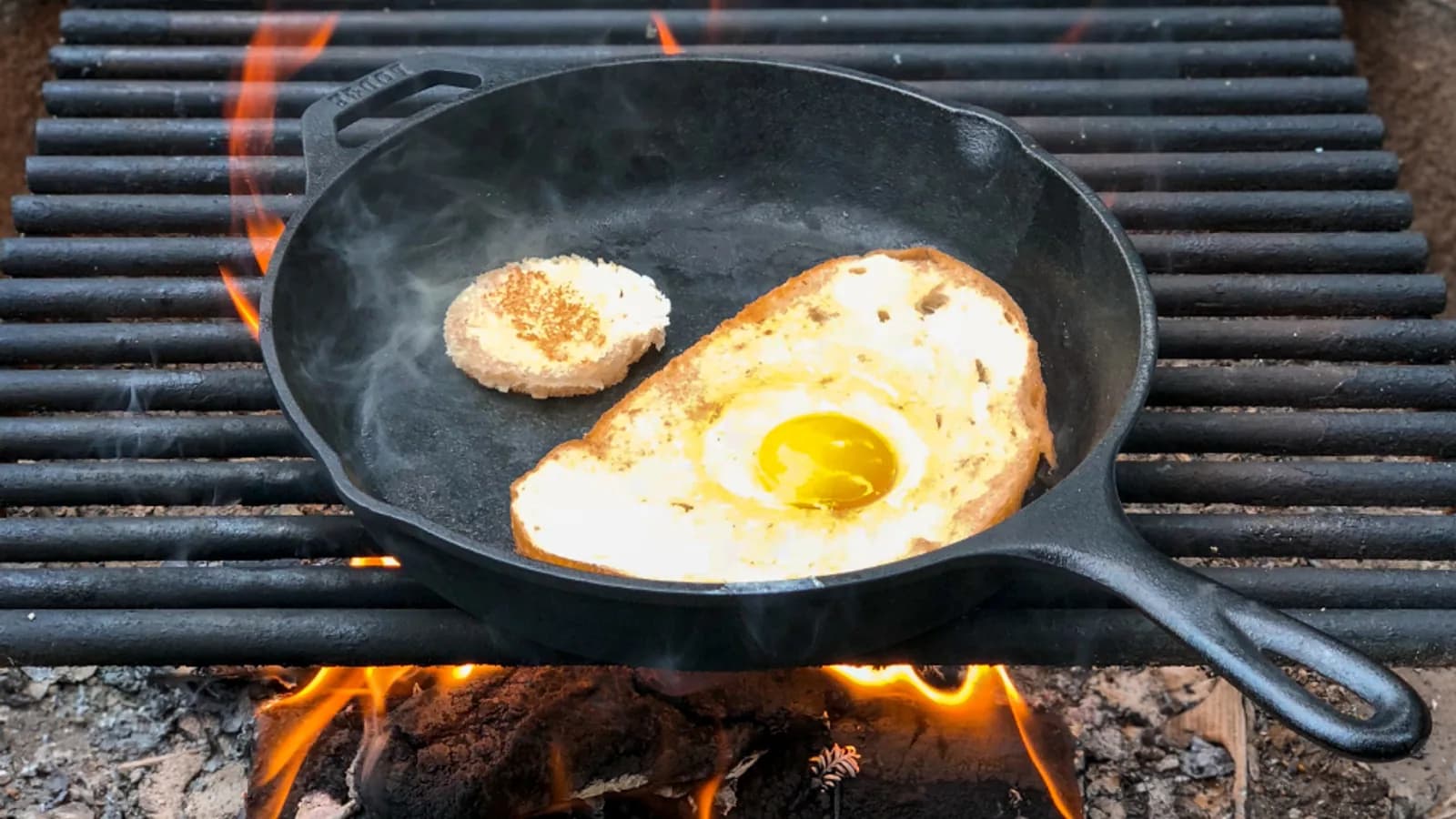
Cold pizza from the fridge is a legitimate food and I'm not here to argue with anyone who prefers it. But if you want a reheated slice that's close to fresh, there's a right way and several wrong ways.
The pan method (best overall)
This is the technique, and if you take one thing from this article, take this.
Put a dry non-stick or cast iron skillet over medium heat. No oil — the pizza has plenty. Lay the slice in and let it go for two minutes so the base starts to crisp. Then add a lid and cook for another two minutes.
The lid is the crucial step. Without it you get a crisp base and cold cheese. With it, moisture from the pizza itself turns to steam and re-melts the topping while the base continues crisping against the pan. Two things at once.
Four minutes, one pan, and the result is genuinely close to fresh. Slightly crisper on the bottom than the original, if anything.
For an extra-good version, add a few drops of water to the pan just before you put the lid on. More steam, faster cheese melt.
The oven method (best for volume)
When you're reheating six slices rather than one, the pan becomes tedious. Use the oven.
Preheat to around 375°F. Put the slices directly on a baking tray, or better, on a piece of foil placed straight on the rack. Six to eight minutes.
Preheating matters. Putting pizza into a cold oven and letting them heat together produces a slow, drying bake that dulls everything. Wait for the oven.
A pizza stone or steel, if you have one, makes this method excellent rather than merely good.
The air fryer method (best for thin crust)
Around 350°F for three to four minutes. The circulating air crisps the base beautifully and it's fast.
This is the best method for thin crust specifically, and for anything breaded — leftover boneless bites, wedges, cinnamon twists. Its limitation is capacity. Most baskets fit one or two slices, so it's a solo-portion technique.
Watch it closely. The margin between crisp and burnt is narrower here than in an oven.
The microwave (the wrong answer)
Everyone knows this and everyone does it anyway, so let's at least explain why it fails.
Microwaves work by exciting water molecules. That drives moisture out of the crust, where it becomes steam, which then condenses back into the base as things cool. The outcome is a crust that's simultaneously tough and damp — the worst of both.
No technique fixes this. Not a glass of water alongside, not a paper towel underneath, not lower power. Those tricks reduce the damage marginally; they don't solve the mechanism.
If the microwave is your only option, use it and don't feel bad. Thirty seconds at half power is less destructive than ninety seconds at full. But if a pan is available, use the pan.
Item-specific notes
Cheesy bread comes back very well in an oven or air fryer. Five minutes and it's close to new.
Bread twists are the best reheating item on any pizza menu. Three minutes in an air fryer and they're indistinguishable from fresh.
Wings need dry heat — air fryer or oven, never microwave, which turns the skin to leather.
Pasta is the exception where a microwave is fine. Add a splash of milk to an alfredo before heating; marinara needs nothing.
Stuffed crust is the one item that genuinely doesn't recover. The cheese inside the ring sets and stays set. Eat it fresh.
Storage, briefly
Get it in the fridge within two hours. Cover it or move it to a container — an open box dries the slices out and the cardboard doesn't seal.
Three to four days refrigerated is the standard guidance. Pizza that's sat out overnight should go in the bin rather than the fridge, however sound it looks. That's a food safety line rather than a quality one.
Pizza also freezes better than people expect. Wrap individual slices, freeze flat, and reheat from frozen in an oven for about twelve minutes. Not as good as fresh, considerably better than wasting it.
Example prices — verify at official checkout. Menu pricing is set independently by each franchise store and changes without notice.
Domino's Menu Guide is an independent publication. We are not affiliated with, endorsed by, sponsored by, or connected to Domino's Pizza LLC or any of its subsidiaries or franchisees. All trademarks and brand names belong to their respective owners and are referenced here only to describe the food being discussed.
Frequently asked questions
Keep reading
 Ordering Tips
How Much Should You Tip a Pizza Delivery Driver?
The delivery fee isn't the tip. Here's what drivers actually earn, what the standard is, and when to go above it.
 Ordering Tips
How to Order Pizza for 10, 20 or 50 People Without Getting It Wrong
Slice counts, topping ratios, timing, and the mistakes that leave half a party unfed. A practical planning guide for group orders.
 Ordering Tips
The Late-Night Pizza Playbook: Ordering After 11pm
Closing times are not what they look like, driver capacity thins out after midnight, and some items should never be ordered late. Here's how to do it properly.